You often don’t think much about your nails until something goes wrong with them. It might happen when your thumbnail catches on your sweater and breaks or when a crack appears down your index finger while opening a jar or tying your boots. The nail bed may seem like a tiny part of your body, but it can cause you discomfort that won’t go away. It may hurt when you type, sting in the cold, or just make you feel that your hands have become weaker than they should be.
The Quiet Story Hidden in Your Nail Beds
Hold your hand up to the light and examine your nails. Are they smooth, or do they have fine ridges like tiny dried river paths? Do the tips appear solid and opaque, or thin and translucent? Maybe you notice small splits at the edges, places that peel repeatedly like a dry leaf folded too many times.
These small details are not random. They’re like tree rings, quietly recording your body’s experiences over recent months. Stress, cold seasons, hormonal shifts, or age-related changes often show themselves first in delicate places. Nail splitting frequently begins right at the nail bed—the living base beneath the visible nail. When that foundation is irritated or undernourished, the nail becomes brittle and prone to breaking during everyday tasks.

Looking Beyond Cosmetics to the Root Cause
For many people, the first response to fragile nails is cosmetic. Polishes, gels, acrylics, and “strengthening” treatments promise a smooth, glossy shield. While they may mask damage temporarily, they don’t address what’s happening underneath. Beneath the shine, the real question remains: what if lasting improvement begins below the surface, in the chemical exchanges between proteins, minerals, collagen fibers, and hydration?

Healthy nails aren’t just about appearance; they are extensions of living tissue, shaped by nutrition, circulation, and support. When the nail bed lacks resilience, no surface coating can fully compensate. True strength comes from within, not from what is painted on top.
An Unexpected Hero Found Inside an Eggshell
When you crack an egg, the shell usually goes straight to the bin. However, when peeling a hard-boiled egg, you’ll notice the thin, translucent film clinging between the shell and the white. This is the eggshell membrane.
In nature, this membrane protects the developing chick by absorbing shock. Scientific studies revealed that it’s rich in collagen, elastin, glycosaminoglycans like chondroitin sulfate and hyaluronic acid, and essential amino acids. Together, they form a flexible yet strong biological network—exactly the balance needed for healthy nail beds.
Supporting Nails from Within with Eggshell Membrane
Think of the nail bed as a living garden. The visible nail is made of dead keratin cells, but improving future nail strength means tending to the nail bed—the soil. This soil is nourished by blood vessels that deliver nutrients day and night.
Eggshell membrane supplements don’t act like quick-dry topcoats. Once ingested, their components become part of the body’s internal system. Collagen strengthens the nails’ structure, elastin adds flexibility, and glycosaminoglycans support hydration. Over time, many people notice fewer splits, less peeling, and nails that hold up better during everyday tasks.

| Key Component | Role in the Body | Why It Matters for Nail Beds |
|---|---|---|
| Collagen (Type I & V) | Provides structural support to skin and connective tissues | Helps reinforce the matrix where nails form |
| Elastin | Supports elasticity and resilience | Encourages nails that flex without damage |
| Hyaluronic Acid | Promotes hydration and cushioning in tissues | Supports moisture balance around the nail matrix |
| Chondroitin & Other GAGs | Help maintain healthy connective tissue structure | Contributes to a stable nail foundation |
| Amino Acids (e.g., proline, glycine) | Building blocks for proteins | Provide raw materials for keratin and collagen |
Building a Simple Daily Ritual for Nail Support
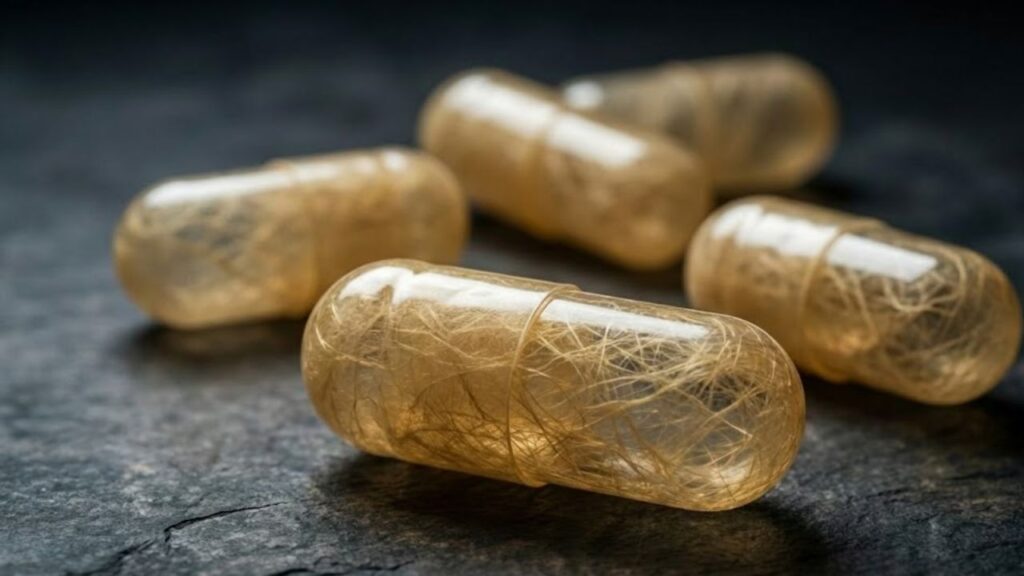
Taking eggshell membrane supplements feels more like building a healthy habit than taking medicine. Most supplements come in capsule or tablet form and should be taken once daily. Consistency matters more than timing, as nails grow slowly, and improvements appear over weeks.
Many products provide a few hundred milligrams of eggshell membrane daily, sometimes with added vitamin C to support collagen formation or minerals like zinc and copper for keratin metabolism. Alongside hydration, balanced meals, and protecting hands from harsh chemicals, these habits help support your nails.
Who Benefits the Most
Eggshell membrane is often explored by people who experience chronic brittleness despite good topical care, age-related dryness, or damage from frequent washing and cold climates. It’s also appealing to those seeking a supplement that supports both joint comfort and nail health, as eggshell membrane benefits connective tissue support broadly.
While it may not provide perfection, it can improve nail resilience—nails that feel less fragile and more dependable in daily use.
Setting Realistic Expectations
Eggshell membrane is generally well-tolerated, though not suitable for those with egg allergies. Mild digestive changes may occur but usually improve when taken with food. Results take time, as you’re growing new nails, not fixing old ones. Over time, nails feel less papery, peel less, and grow more evenly.
Supporting nail beds from within is about comfort—opening jars without pain, enduring cold weather without cracks, and reducing splits that disrupt ordinary moments. Eggshell membrane helps restore balance, offering nails that are stronger and more flexible.

A Small Daily Choice with Lasting Effects
The next time you crack an egg, notice the delicate membrane lining the shell. Once it protected a chick, and now, in powdered form, it supports your connective tissues. Over months, this simple choice can lead to stronger growth, fewer splits, and hands that feel at ease in daily life. It’s a small, quiet act of resilience that starts beneath the surface.